My Top 10 Picks to Enjoy Winter in Japan
Hi friend –
Are you trying to figure out if it’s worth spending winter in Japan? Well, you’ve come to the right place!
As someone who’s gone through this process before and combed through the very same list of options that I share below, I’m here to help you! In this guide, I’ll provide the top 10 things you can do in winter specifically to see if this time of year is right for you.
This guide is for the person who is toying with the idea of traveling to Japan during the winter. Maybe you found an amazine airline or credit card points deal or you’ve already booked your flights – either way, you’re looking for something to kick off your trip planning to figure out what’s especially worth doing this season and whether a winter trip to Japan is right for you.
This post may contain affiliate links for highly recommended products or services that I want to share with you!
Does it Snow in Japan?
Yes, Japan experiences snow every winter! The average temperature in Japan during the winter months ranges from -5℃ to 5℃ (23-41 F). However, location and time of year will greatly determine how cold it is and how much snow you’ll see (if any).
- Location: Areas in northern Japan like Hokkaido see significant snowfall during the winter months and is home to some of the best ski resorts in the world. As you make your way south, you’ll see less and less snowfall.
- Time of Year: The snow season typically spans from mid-December to March, with the highest amount of snowfall occurring in January and February. However, depending on your location, the season might start as early as late November and extend until May.
🗻 January is considered to be the coldest month in Japan.
Where Does it Snow in Japan?
Here are some of the best regions and cities in Japan known for their snowy winters:
- Hokkaido Prefecture: This island way up north is the #1 winter destination in Japan, which is famous for its heavy snowfall. Sapporo is one of the most popular places to visit in Hokkaido, especially in February for the Sapporo Snow Festival. Winter is also perfect to visit the best ski resorts the country has to offer, including Niseko, Furano, and Rusutsu.
- Yamagata Prefecture: Located in the Tohoku region, Yamagata Prefecture is one of the snowiest places in Japan. Every winter, the trees at Zao Onsen Ski Resort transform into “snow monsters” due to the heavy snowfall and freezing temperatures. Nearby, you’ll find Ginzan Onsen, one of the most picturesque hot spring towns in the snow. And of course, there’s the annual Uesugi Snow Lantern Festival that takes place every February in Yonezawa.
- Nagano Prefecture: Nagano is home to the Japanese Alps and some of the best ski resorts in Japan, including Hakuba, Nozawa Onsen, and Shiga Kogen. It’s also where you’ll find the adorable Japanese snow monkeys enjoying a hot bath at the famous Snow Monkey Park.
- Gifu Prefecture: This central prefecture also experiences snowfall and gorgeous winter scenery like in the beautifully preserved old town of Hida-Takayama. Shirakawago is a UNESCO World Heritage Site and another popular winter destination, best known for their traditional thatched-roof houses that are especially stunning under a blanket of snow.
Top 10 Things to Do to Enjoy Snow in Japan
When I think of winter in Japan, I think of snow monkeys bathing in the hot springs, fresh powder at one of Japan’s famous ski resorts, or historic villages that look like they’re straight out of a wintery fairy tale.
Here are all of the places and things I considered doing when visiting Japan in winter:
1. Walk Around Ginzan Onsen (Yamagata Prefecture)
Located in Yamagata Prefecture, Ginzan Onsen is a hot spring town that is straight out of fairy tale during winter.
Skip the public baths here and instead spend your time walking along the river lined with old-fashioned street lamps and snow-covered ryokans. Ginzan Onsen is especially beautiful at night when the lights turn on and, if you’re lucky, you might be there as it snows.
Unless you have a reservation at one of the private onsens, aim to do this as a day trip and only if it’s the right time of year. Otherwise, there’s not that much to do in the town. If you are looking to stay in the area, be warned that it is EXTREMELY popular during the winter months so book your accommodation far ahead in advance.

☃️ BEST TIME TO SEE SNOW IN GINZAN ONSEN: January.
The average amount of snow & snow days per week are:
December: 4.6 days (11 in)
January: 5.7 days (13.4 in)
February: 5.1 days (10.2 in)
2. Visit Shirakawago (Gifu Prefecture)
Shirakawago is a historic village in Gifu Prefecture. Its distinct gassho-zukuri (traditional thatched-roof houses) are what make it famous and recognized as a UNESCO World Heritage Site.
Of all the seasons, Shirakawago is especially beautiful in the winter when the snow covers the thatched roofs. It’s best to stay in the town for at least one night so you can spend time wandering around the village during the day and see it illuminated at night.

☃️ BEST TIME TO VISIT SHIRAKAWAGO: January.
The average amount of snow & snow days per week are:
December: 3.5 days (13.4 in)
January: 4.6 days (19.3 in)
February: 4.0 days (13.0 in)
3. Find Japanese Macaques at Jigokudani Snow Monkey Park (Nagano Prefecture)
If you’re wondering where you can see snow monkeys in Japan, you’re likely thinking of Jigokudani Snow Monkey Park.
Located in Nagano Prefecture, Jigokudani is where you want to be if you want to see Japanese macaques bathing in the hot springs in the middle of the mountains. While the park is open year round, winter is when you’ll most likely see the monkeys bathe in the water as they try to stay warm.
Seeing the monkeys is one of my all-time favorite travel moments and I absolutely think it’s worth doing if you’re in Nagano or even as a day trip from Tokyo.


☃️ BEST TIME TO VISIT JIGOKUDANI SNOW MONKEY PARK: January & February.
If you’re curious what the park will look like before your visit, you can check the live camera.
4. See Snow Monsters at Zao Onsen Ski Resort (Yamagata Prefecture)
Zao Onsen is a ski resort in Yamagata Prefecture.
Despite its name, it’s best known for its snow monsters or “juhyo” (ice trees) that form when strong winds blow snow onto the trees, freezing them into all sorts of shapes. Skiers and non-skiers alike are welcome to take the ropeway or gondola to get a closer look.

☃️ BEST TIME TO VISIT ZAO ONSEN SKI RESORT: mid-February. This is when you have the highest chance of seeing the snow monsters in all their glory.
5. Visit the Asahiyama Zoo (Hokkaido Prefecture)
Located in Hokkaido, Asahiyama Zoo is known for its unique and interactive exhibits that allow visitors to see animals up close and personal.
While some attractions like the Polar Bear Pavilion are open year round, the Penguin Parade only happens during the winter. Twice a day, you can watch the penguins march and waddle around the zoo. I LOVE penguins so I would 100% do this if I was visiting Hokkaido during the winter.

☃️ BEST TIME TO VISIT ASAHIYAMA ZOO: December through mid-March (i.e. when the Penguin Parade takes place).
6. Explore the Sapporo Snow Festival (Hokkaido Prefecture)
The Sapporo Snow Festival is a week-long festival held in early February that features massive snow and ice structures that are lit up at night.
The Snow Festival has 3 sites:
- Odori Park – the main site with the snow sculptures
- Station Avenue – more snow sculptures that light up at night
- Tsudomoe – hosts activities like ice skating and snow rafting

☃️ SAPPORO SNOW FESTIVAL 2026 DATES: February 4 – 11, 2026
7. Stop by the Otaru Snow Light Path Festival (Hokkaido Prefecture)
The city of Otaru in Hokkaido hosts the annual Snow Light Path Festival around the same time as the Sapporo Festival.
Every February, lanterns and snow sculptures line the city’s streets. Be sure to grab some food and drinks while strolling through the snowy streets of this small port city.
☃️ OTARU SNOW LIGHT PATH FESTIVAL 2026 DATES: Early to Mid February 2026
8. Ski in Hokkaido (Hokkaido Prefecture)
Hokkaido is home to some of the best ski resorts in Japan and in the world, making it THE destination for skiing and snowboarding enthusiasts.
Some of the top resorts include Niseko, Rusutsu, and Furano. These resorts offer powdery slopes, stunning views of the surrounding mountains, and various terrain to suit all levels.

☃️ HOKKAIDO SKIING SEASON: Early January – mid February for peak powder conditions.
9. Ski in Nagano (Nagano Prefecture)
If you aren’t able to make it to Hokkaido, Nagano is another popular destination for skiing and snow sports.
One of the most famous ski resorts in Nagano is Hakuba, known for its steep slopes, varied terrain, and as the host of 1998 Winter Olympics. Other great options include Nozawa Onsen (perfect if you’re also looking for hot springs) and Shiga Kogen (near the Snow Monkey Park).
☃️ NAGANO SKIING SEASON: Early January – mid February for peak powder conditions.
10. Relax & See Views of Mount Fuji at Ubuya (Yamanashi Prefecture)
While I wouldn’t normally add Yamanashi Prefecture on the list of Japan winter destinations, I’d be remiss not to mention Fujikawaguchiko. This town that surrounds Lake Kawaguchi (one of the Fuji Five Lakes) is one of the best places to stay if you want to stay at an onsen ryokan with views of Mount Fuji covered in snow.
Among them, Ubuya is on my list of dream hotel stays and one of the area’s most luxurious, sought-after ryokans that beautifully combines traditional Japanese architecture with contemporary design. With its indoor and outdoor hot-spring baths with direct views of Mount Fuji, this is the perfect place to slow down during the winter season.
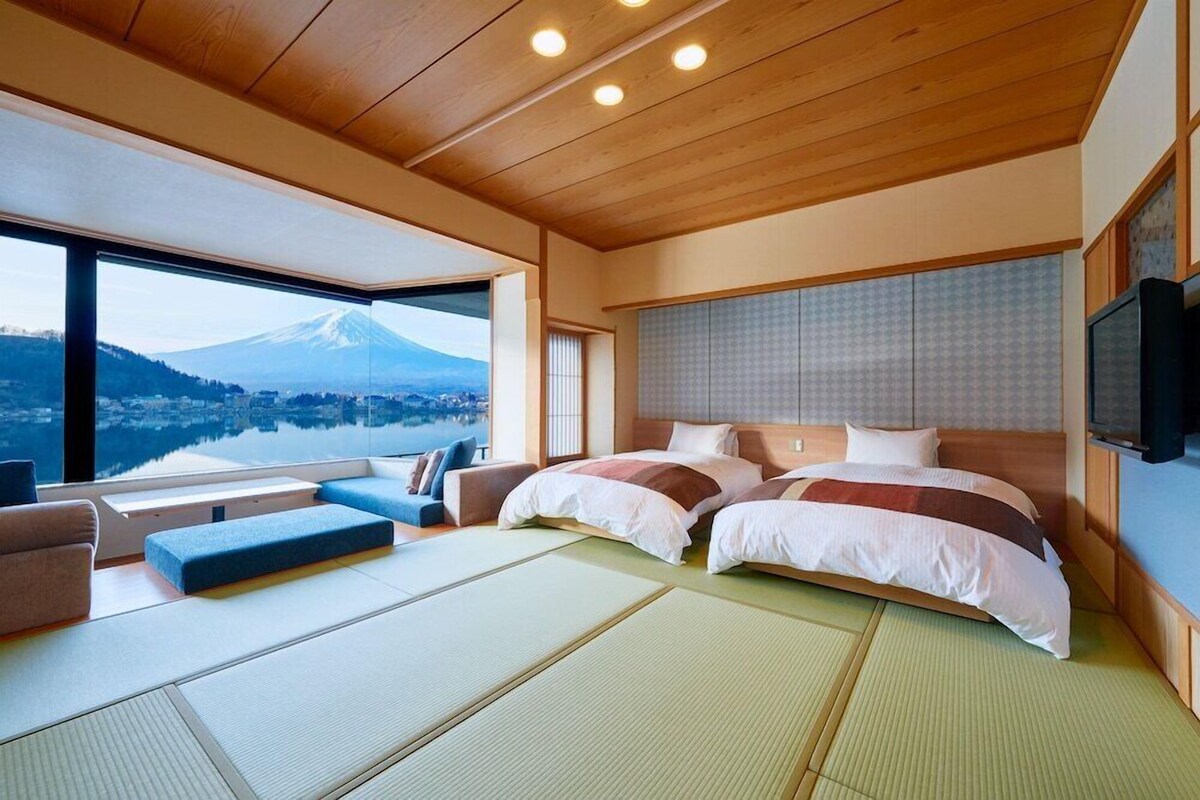
Photo Credit: Expedia, Ubuya
Travel Tips for Japan in Winter
- 📖 Research activities ahead of time: Unless you spend the entire winter in Japan, you won’t be able to see everything. It’s important to have some sense of what you want to see for when you plan on visiting.
- 🏨 Book as early as possible: Popular destinations and activities during the winter season can fill up quickly, so it’s best to plan ahead and book your accommodations as soon as possible. Some onsens like Nyuto Onsen & Ginzan Onsen even book out 6 months in advance!
- 🚄 Have a plan for getting around: Japan’s public transportation is reliable but it’s important to check for any seasonal changes in schedules, especially in snowy areas, and consider reserving seats on long-distance trains (like Shinkansens).
- ❄️ Keep an eye out on the forecast: Before setting out on your trip, keep a close eye on the weather forecasts. Japan experiences heavy snowfall during winters, especially in the north so it’s important to plan ahead and be flexible.
Final Thoughts: is it worth spending winter in japan?
So if you’ve been wondering whether winter is a great time to visit Japan, the answer is a resounding yes!
If you’re looking for a true winter wonderland experience, you’ll want to make your way to the mountainous areas in the north. Hokkaido is the crown jewel of Japan’s snow country where ski season typically spans from early December through mid-to-late March. If you can’t make it to the northern regions, you’ll find lots of snow in the likes of Nagano and Yamagata, thanks to the cold winds that sweep over the Japanese Alps. And even major cities like Tokyo, Kyoto, and Osaka can experience the occasional snowfall to make for a wintery backdrop.
The most important thing to remember when planning your next winter vacation is to stay flexible and plan ahead. Keep an eye out for weather forecasts, book tickets for the bullet train, and stay flexible for any changes that may come your way.
Thanks for reading & I hope this guide convinces you to book that winter trip to Japan! 😊